We reached the Diyasaru Wetland Park on a rainy morning. The Sri Siddharta Vidyalaya kids were scheduled to arrive soon, and Madhu and I were glum. How were the little kiddos supposed to continue an outdoor trail with all this rain? Narmadha, Love-a-Tree Foundation’s partner environmentalist, arrived shortly after, and when we told her the thoughts that plagued our minds, she let out a hearty chuckle.
“Don’t you think wetlands will be best appreciated when they’re wet?”
She clearly did not share our worries, and her happy-go-lucky attitude left us a little relieved. Not long after, she trailed off quietly and gestured at me with her hand. She was observing a bush of ferns and was tenderly turning over one of its fronds to expose its underside. There were equally spaced black dots arranged on its perimeter, forming quite a nice polka dot pattern.
“Those are the mature spores,” said Narmadha, and she dived deep into an explanation of the fern, Polypodiopsida, talking about everything from its classification and lifecycle to regeneration. She did not shy away from using scientific jargon, and this hit me in full force, although I was not new to scientific terminology. She was clearly well versed in her craft, and I admired how eager she was to share knowledge with someone she had just met.
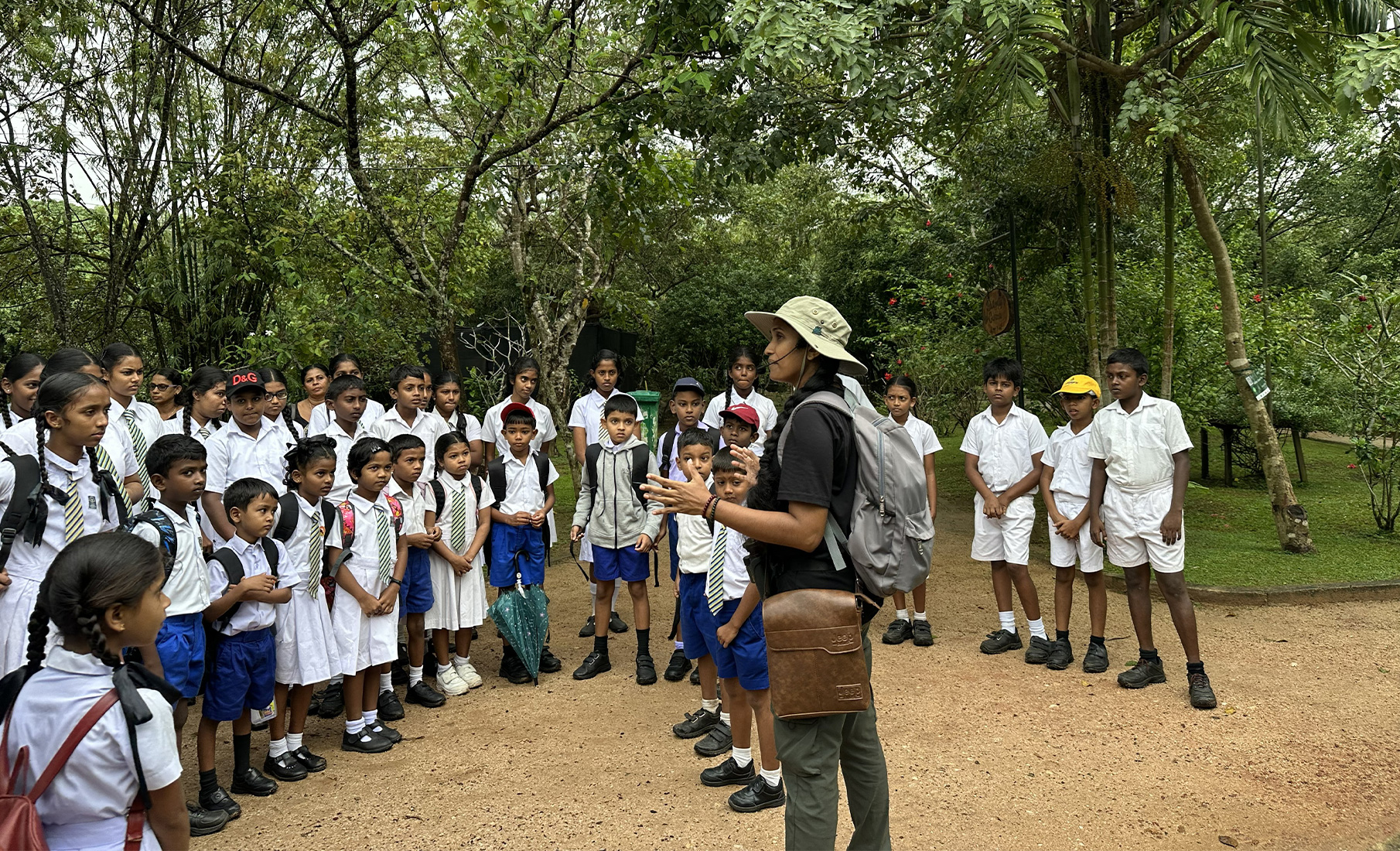
Not long after, Madhu welcomed the students, and we joined her. The student group consisted of around forty curious children, from year 2 to taller and more awkward teenagers from year 9. Narmadha sprang into action and gave the students a succinct introduction to the wetlands that were just a stone’s throw away from their school.
She explained how wetlands are marshy land that’s often overlooked, but they act as sponges and play a vital role in flood control. This piqued the students’ interest, as many parts of Sri Lanka had just been affected by devastating floods following Cyclone Ditwah. She told them how our Colombo wetlands can absorb 40% of rainfall, and how wetlands act like the kidneys of the environment, purifying water and removing toxic heavy metals. She also spoke about how wetlands are biodiversity-rich pockets and are home to multiple plant and animal species. The animal species travel through green corridors into other wetlands, and we need to protect these routes to help with preservation efforts.
Narmadha then led the way into the thick of Diyasaru Park. The students followed her like a pack of wolves, carrying their little notebooks and pencils in hand. We had barely walked 50–100 meters inside when she stopped them and showed them a pond where dragonflies were fluttering around. The recent rains had meant most of the little creatures were hiding from plain sight, but that didn’t stop Narmadha from explaining the small ecosystem.
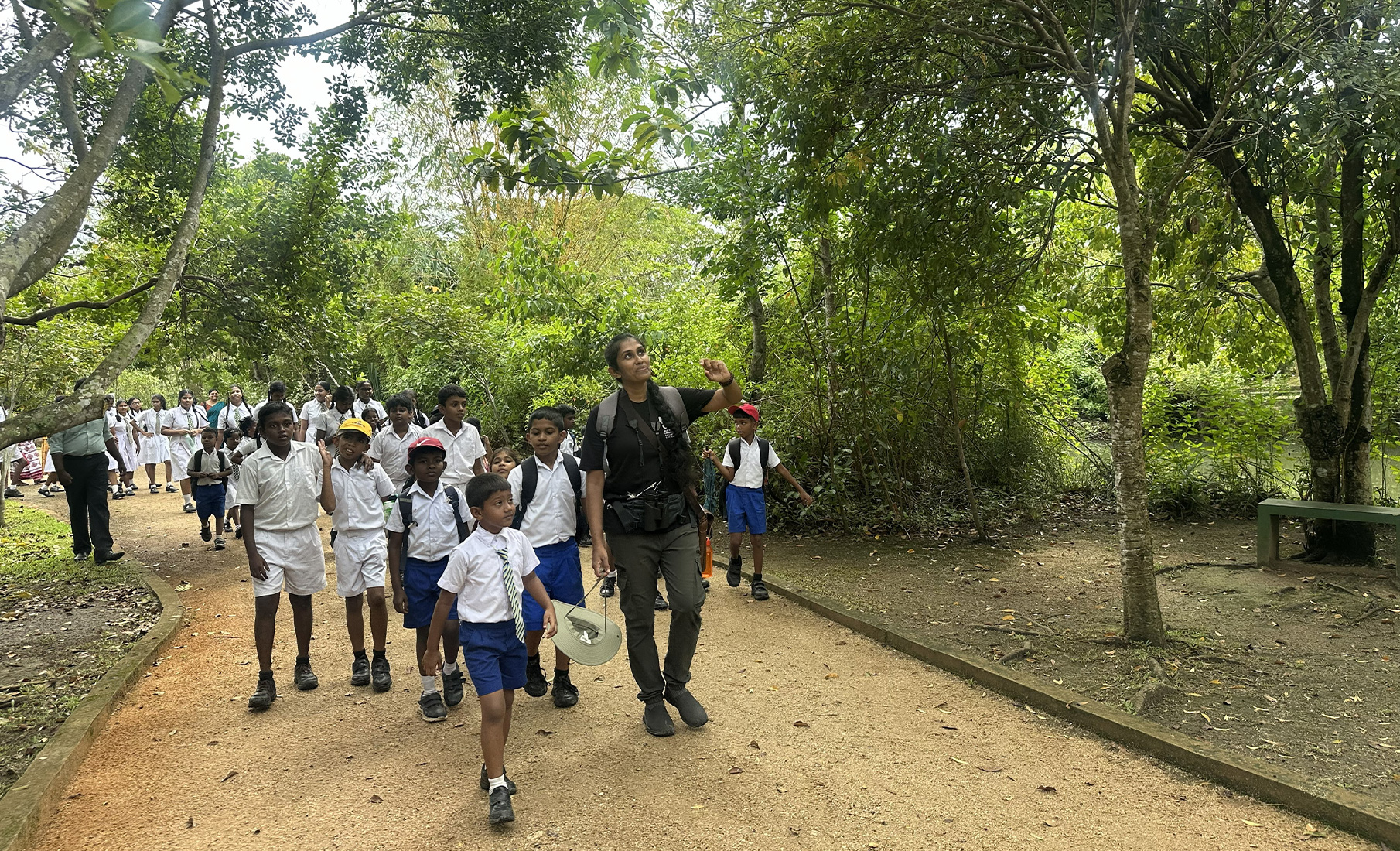
The sun peeked through, and Narmadha’s eyes lit up as she asked the students to watch out for butterflies. The butterflies, who had missed their morning nectar meal because of the rain, would now come out to dry their wings and visit the flowers. Just as she predicted, the students excitedly started spotting butterflies. We spotted the Common Grass Yellow and Psyche, all while our environmentalist briefed us about the different butterfly species that call Diyasaru Park their home. Spotting the butterflies excited the kids, and most of them were scribbling down notes, eager to memorialize the event in some form.
While continuing our trail Narmadha also told us the importance of insects in habitats. Although quite often overlooked, the dragonflies and other bugs play vital roles as pollinators, in food webs and as pest control. We would stop every few meters as Narmadha pointed things out, the tree roots, to the colours of the leaves and the call of a specific migratory bird. Nothing seemed to escape her eyes, or her ears and she took every opportunity to tell the group about it.
Keep in mind that the group consisted of students from different age groups. But somehow Narmadha single-handedly managed to hold all their attention. The little ones kept bumping into her hanging to her every word while the older teens who were initially laidback now stood attentively.
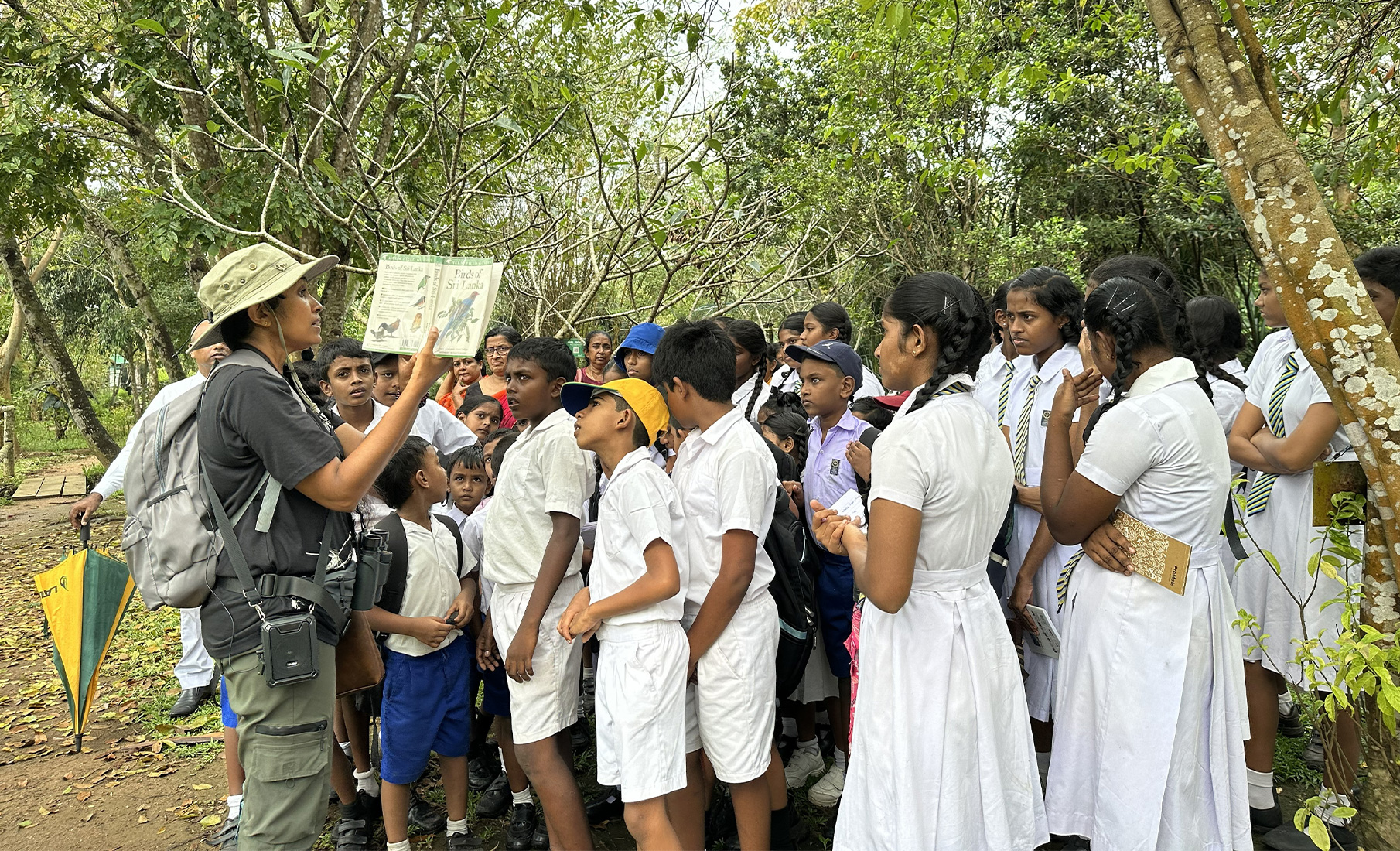
On our journey to the bird watching tower, we spotted a baby water monitor that was in the middle of our path. Narmadha immediately stopped the entire group and asked them to be very quiet as so not to disturb the water monitor. The students stood with bated breath as the chameleon looked squarely at Narmadha’s face, it seemed to be silently acknowledging her small kindness before darting off into the lush undergrowth.
Not long after, we reached the highly anticipated bird watching tower. The students carefully made their way up the precipitous stairway and were met with a breathtaking view of the lakes. Although the sky was still mostly grey, the lotus blooms added a splash of color to the waters and the scene looked like something right out of a Monet’s painting.
Narmada then tasked the group to count the paddling of ducks in the lake. The little eyes undertook the task quite seriously. Narmadha, as with everything, turned the fun exercise into a teaching moment about collecting data and sampling.
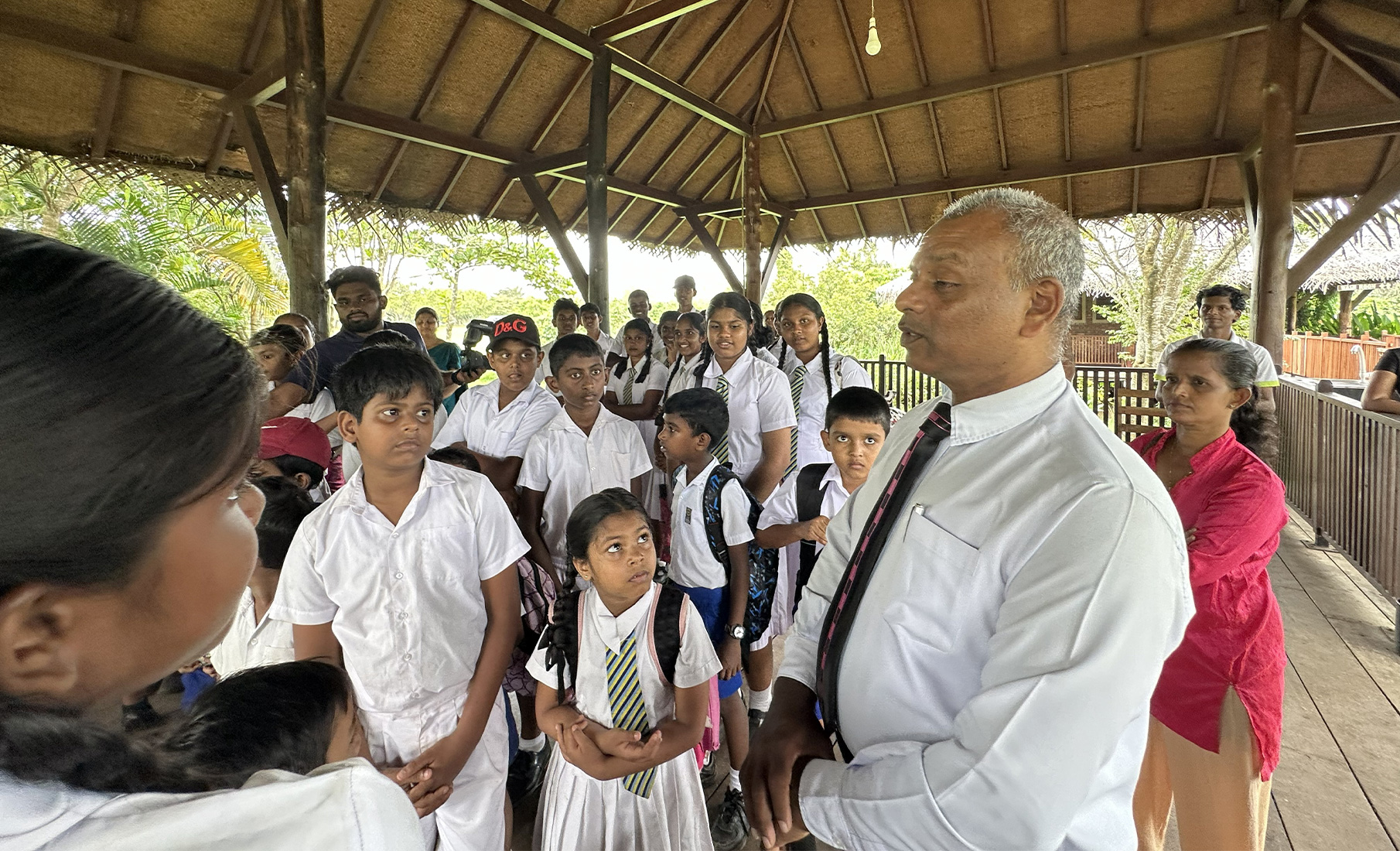
And before we knew it, it was time to set leave and we set back on a winding path that led us to the entrance. I expected the students to be worn down from all the morning activity but to our surprise, they remained energetic on the way back. I asked one of the students if they enjoyed themselves, and he enthusiastically replied that he did. He even went on to say that he wanted to visit the Diyasaru park again and see all the things they just learned with a fresh set of eyes. The students then gathered for a little refreshing treat at the park’s pavilion. They seemed eager to linger and enjoy the crisp outdoors. But before they bade their goodbyes we had a girl come forward and very diligently thank Narmadha, Love-a-Tree foundation and DIMO for taking them around the park. Her speech seemed to inspire more kids and we had a few more nervously step out of their comfort zones to tell the group about the things that they enjoyed the most. Notably one student even used Narmadha’s language of imagery and storytelling which showed that the kids were not just picking up the facts but also developing their soft skills
Now more than ever, it is vital for us to protect and persevere our wetlands. February 2nd marks World Wetlands Day and we hope to be back with more community activities soon.