I didn’t think picking up trash could make me feel connected to a wetland.
Before today, wetlands were only textbook ideas to me.. definitions, diagrams, notes about biodiversity and flood control. It all made sense on paper, but it never felt real. They seemed far away, like something you study in class, not something that exists in our own city.
That changed after a few of us joined an awareness session run by the Love A Tree Foundation supported by WLI Small Grants a few months ago. We found out wetlands aren’t “empty land” or useless spaces. They’re living systems that quietly protect us. They reduce flooding, filter water, support birds and fish, and help cool the city. I remember realizing I’d walked past places like this countless times without actually noticing them.
Today, we, the members of the Interact Club of Colombo, came back together for a wetland clean-up, inspired by that session. It didn’t feel like a classroom lesson at all. It felt real the moment we arrived. Plastic was caught in the mud, drifting in the water, tangled in the plants. At first it was hard to look at, not just because of how messy it was, but because it showed how easily we take things like this for granted.
We got to work together. Some of us used long sticks to reach waste in tricky spots, while others walked through the park with garbage bags, collecting what we could. At first it felt like a drop in the ocean. But little by little, the place began to look different, not perfect, but noticeably cleaner. And surprisingly, that small improvement felt powerful. What we were doing actually mattered.
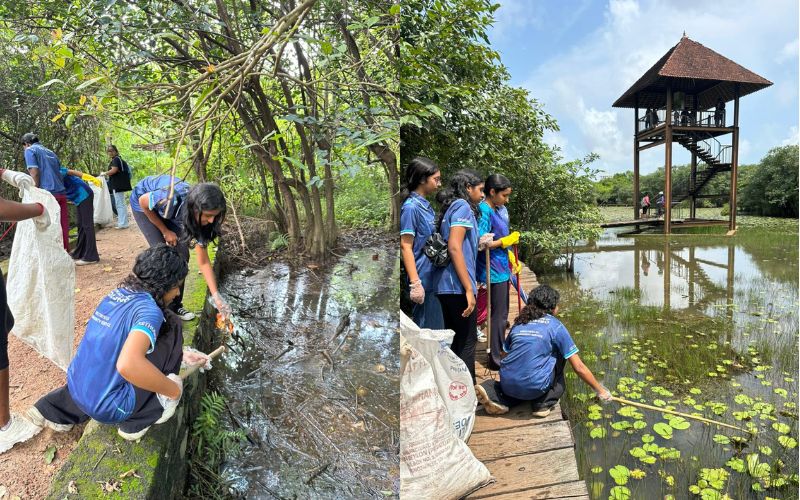
What surprised me most was how personal it felt. It wasn’t just about cleaning up a space. It felt like we were finally meeting the wetland properly for the first time.
That’s when the idea of the multiplier effect from the session clicked for me. One awareness session brought us here. This clean-up will spark conversations with friends and family. Those conversations might change how other people see wetlands. And maybe some of us will go on to organize more events and protect other places we used to overlook.
It doesn’t feel like one huge moment of change. It feels like small actions quietly spreading from one person to the next.
On the way back, I realized something simple but important: I don’t see wetlands as “just wetlands” anymore. I see them as living, fragile places that deserve our attention.
And maybe that’s what real learning is ,not just knowing something, but feeling responsible for it.