Fishing cats are a wonderful variant of the feline family in my opinion. They may not have gorgeous fur coats like their tiger cousins or fierce roars like the lions, but they are the perfect mix of curiosity and adventure. Their unnatural love for water makes them a unique cat. They outshine the saying 'a Scaredy Cat' by fearlessly stepping out into our environment, and then go on to conquer both land and water plains. Me being a huge cat-lover myself I love volunteering and helping to protect them. Becoming a volunteer opens up so many ways to safeguard our fishing cat's home. Having urban fishing cats around us is fascinating.
Fishing cats are a species of felines. They may not be as famous as their cousin, the cheetah or leopard but they are equally interesting. They are native to south and southeast Asia. Their habitats are wetlands, swamps and mangroves, they are the terrestrial apex predators of their habitats. They can weigh from 11lb to 37lb, they are roughly twice the standard size of a domesticated cat. Their fur coat is quite dense and coarse and is patterned with a quite random arrangement of black to brown spots in long rows across a tawny-gray background. These stocky felines only appear late at dusk and early dawn here in Sri Lanka.
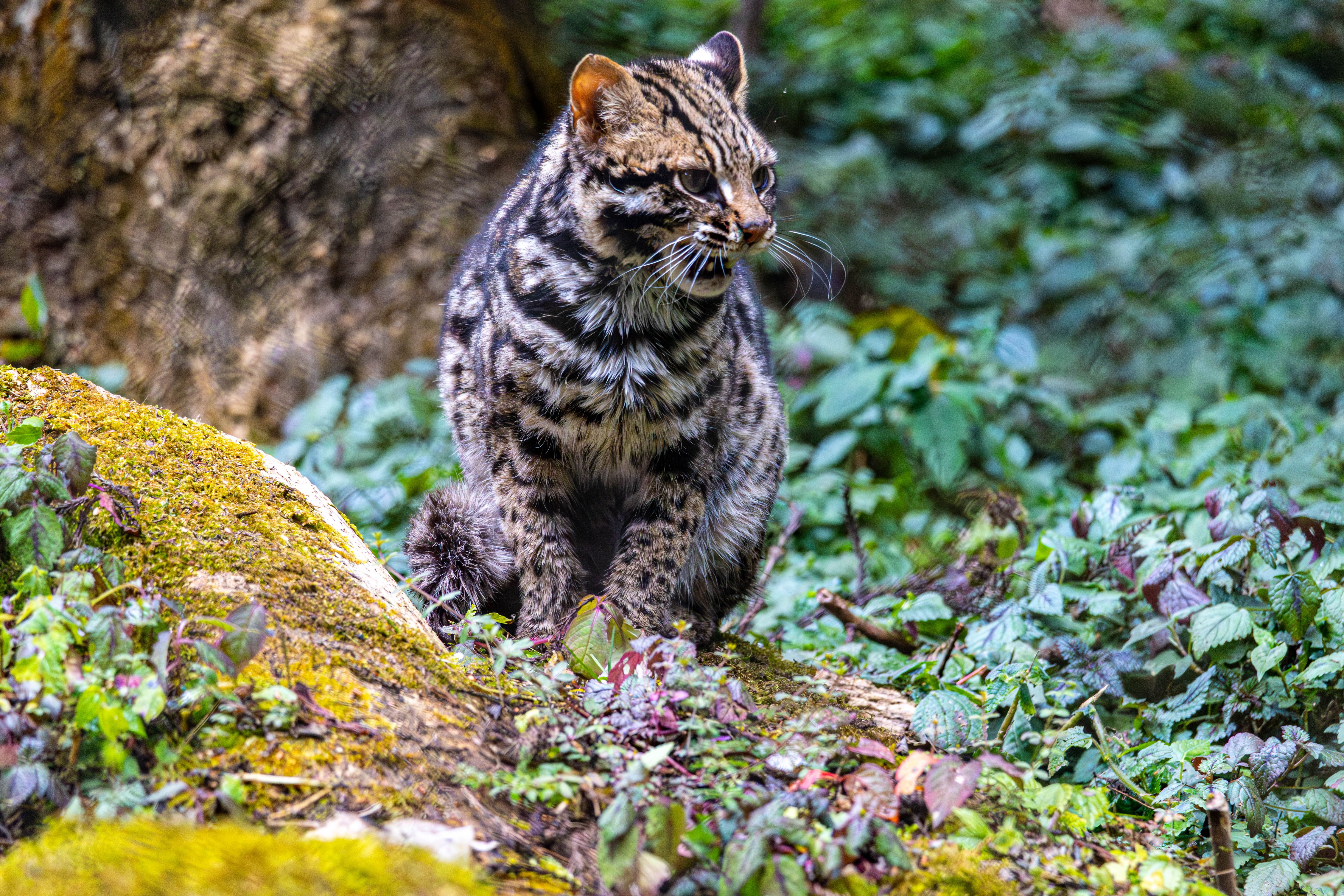
Unlike their domesticated cousins, fishing cats love the water. Here are some features that they use to navigate in while swimming. Their front toes are webbed making the extra skin works exactly like a paddle to push back water while swimming making it easier for them to glide through the water. If gone deep into the marshes or swamps at the right time you can see big ripples in the water made by the cats. Their tails are unusually short and thick, measuring only about one-third of it's total body length, it acts as a muscular rudder to help keep a good sense of direction while they swim. Fishing cats have a few aquatic behaviors. They dive head-first into the water to get a precise targeting on fast prey. Fishing cats also waddle in shallow waters to catch small prey like rodents but they prefer swimming. Fishing cats are living bio-indicators of water quality, when the water quality turns bad the fish will die therefore there is no food for the fishing cats to eat, then they vanish. When they trek in the water for fish and end up seeing insects or rodents they jump in for the kill, making them the wetland’s best pest control.
Fishing cats have adapted to survive in human environments with their great hunting skills and intelligence. They learn to avoid roads with heavy traffic and go on more remote streets. This is proof of urban resilience, It means they can tolerate human activities. Fishing cats symbolize resilience, highlighting how native wildlife continues to grow despite rapid urban development and environmental change. They have a 'ghost cat' lifestyle. You may not see them but they see you. Their main hunting time is at night, they are not daylight hunters. They boost eco-tourism in many wetlands and mangroves. Their rare presence inside a major and bustling city like Colombo attracts global wildlife tourists therefore generating green jobs and increasing the local economy. The increase in fishing cat colonies shows us that our Beddagana wetlands are becoming cleaner and more environmental-friendly.
Fun Facts
- Unlike most felines fishing cats QUACK instead of meowing
- To draw attention to themselves they lightly tap the surface of the water to lure fish to them.
- Their claws act as built in fish hooks, being incredibly sharp.
- They were born with a natural wetsuit, Their fur coat has two dense layers making them practically waterproof.
- Their ears feature a prominent white spot on the back.
If you are fascinated about fishing cats like me here is how you can help. Fishing cats need our help now. By supporting wetland conservation teams we can help save marshes, mangroves and riverbanks, the habitats that they rely on for food and shelter. Reduce pollution by disposing waste carefully and correctly helps keep waters clean therefore leading to a clean and safe environment for the fishing cats. Joining volunteer work or donating to local conservation clubs makes sure that the environment is in safe hands. Choose environment safe produce and seafood. Report wildlife sightings, show your sightings to proper organizations like the Urban fishing cat conservation project , they can help researchers monitor them and identify places that need protection. Become a citizen scientist, by becoming one you can contribute all your observations, photographs and data that will help experts understand wildlife populations and habitats. Raise awareness by telling others the importance of fishing cats, inspiring more people to help. If all of these are done we can secure a future for fishing cats and their environment.
Sources
Urban fishing cat conservation project.
Fishing cat conservation alliance